Zero Turn Mobility Scooters: Best Models for Tight Spaces [2026]
Standard mobility scooters need wide arcs to turn around. Zero-turn models spin in place, making them the best option for navigating narrow hallways, small apartments, and crowded indoor spaces.

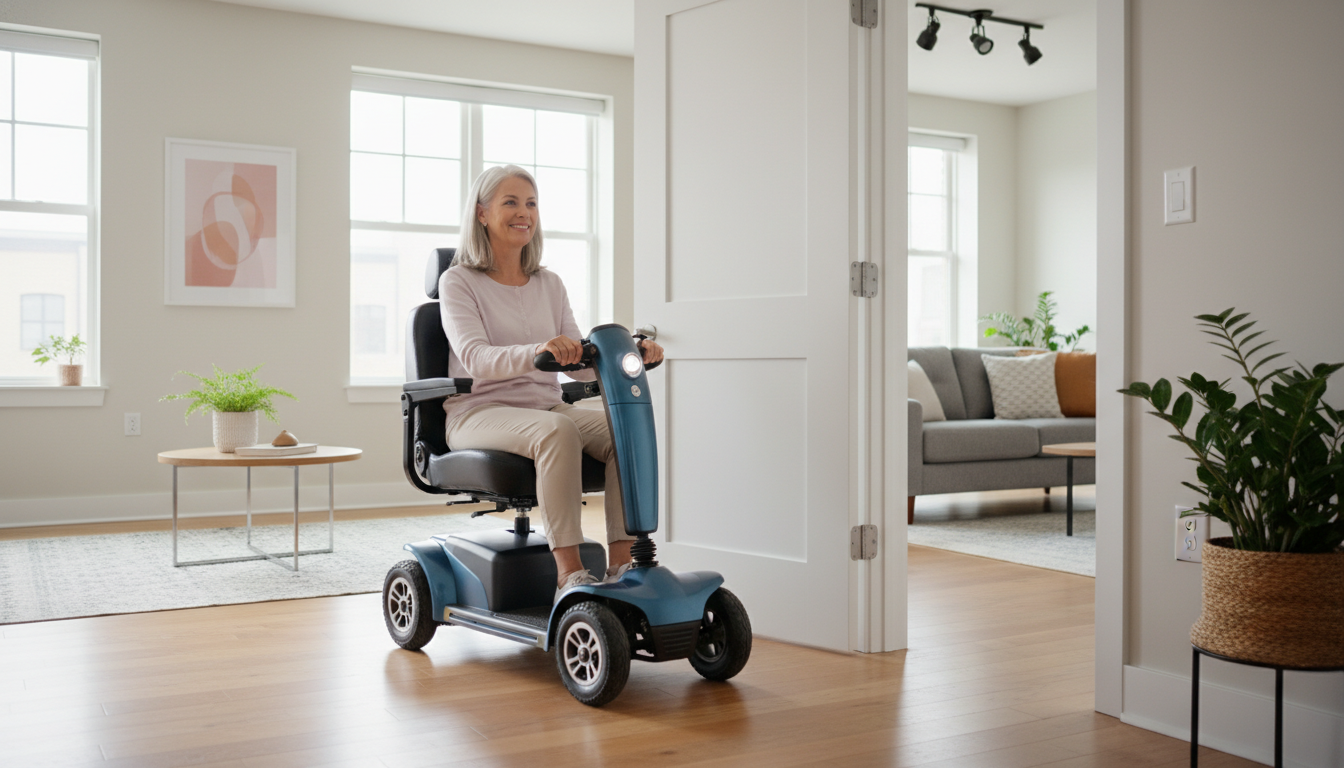
What Is a Zero Turn Mobility Scooter?
A zero-turn mobility scooter is a scooter that can spin 360 degrees in its own footprint without requiring any forward or backward movement. Where a standard scooter needs a wide arc to change direction — much like a car making a U-turn — a zero-turn model rotates in place, similar to an office chair spinning on its base.
The technology behind this varies by manufacturer, but it typically uses one of two approaches: independent rear wheel drive, where each rear wheel is powered by its own motor and can turn at different speeds (or in opposite directions), or center-pivot steering, where the front section of the scooter articulates at a central pivot point.
Think of it like a zero-turn lawnmower, but designed for mobility. The practical result is a turning circle as small as 33 inches, compared to 50 to 60 inches for a standard 4-wheel scooter. That difference transforms how the scooter performs indoors.
Why Zero Turn Matters for Indoor and Home Use
The numbers tell the story. The average interior doorway in an American home is 32 inches wide. Hallways typically measure 36 to 42 inches across. A standard 4-wheel mobility scooter with a 55-inch turning radius simply cannot make a U-turn in a hallway — the user has to do a multi-point turn, backing up and going forward repeatedly, which is both frustrating and potentially unsafe.
A zero-turn scooter with a 33-inch turning circle can spin around completely in that same hallway with room to spare. That single capability changes the daily experience of using a scooter indoors from cumbersome to effortless.
Ideal environments for zero-turn scooters:
- Apartments and condos with narrow hallways and compact floor plans
- Small homes where rooms are close together and doorways are standard width
- Grocery store aisles where you need to reverse direction without a 10-point turn
- Restaurants and doctor’s offices with tight waiting areas and narrow passages
- Assisted living facilities where shared hallways and common areas can be crowded
For seniors living in assisted living communities or condos, a zero-turn scooter is often the difference between using the scooter throughout the facility and only using it in the wider common areas. It is genuinely a game changer for indoor mobility independence.
Best Zero Turn Mobility Scooters for 2026
These three models represent the best zero-turn or near-zero-turn scooters available today, each serving a different use case.
#1 Vive Health Compact Scooter — Best Overall Zero Turn. The Vive Compact delivers the smallest footprint in its class while maintaining a 250-pound weight capacity and 10-mile range. It fits through ADA-compliant doorways with ease, and its tight turning radius makes it the most maneuverable full-featured scooter we have tested. At approximately $1,600, it is the best value in the zero-turn category for seniors who need reliable daily indoor mobility.
#2 EV Rider Transport AF+. The Transport AF+ is an ultra-light folding scooter with near-zero-turn capability. It is airline approved, folds in seconds, and weighs significantly less than most competitors. At around $1,900, it is the premium choice for seniors who travel frequently and need a scooter that performs well both at home and on the road. The trade-off is a lower weight capacity and shorter range compared to the Vive.
#3 Merits Health S741 Roadster. The Roadster is a full-size scooter that incorporates zero-turn technology without sacrificing capacity or range. It supports 300 pounds, delivers a 15-mile range, and handles both indoor and outdoor use confidently. At approximately $2,200, it is the most capable zero-turn model available — ideal for seniors who want one scooter that does everything. For a broader look at how wheel configurations affect maneuverability, see our 3-wheel vs 4-wheel mobility scooter guide.
Zero Turn vs Standard Turning Radius
Here is how zero-turn compares to conventional 3-wheel and 4-wheel scooters across key indoor navigation tasks.
| Feature | Zero Turn | Standard 3-Wheel | Standard 4-Wheel |
|---|---|---|---|
| Turning Radius | ~33″ | 32–40″ | 50–60″ |
| Hallway U-Turn | Yes — single smooth rotation | Possible in wider hallways | No — requires multi-point turn |
| Doorway Navigation | Excellent — can approach from any angle | Good — needs some alignment | Adequate — needs straight approach |
| Outdoor Stability | Good | Fair | Excellent |
| Price Premium | 20–40% above standard | Baseline | 10–20% above 3-wheel |
Notice that zero-turn and standard 3-wheel scooters have similar turning radius numbers, but they achieve maneuverability differently. A 3-wheel scooter’s tight turning radius comes from its single front wheel, which limits stability. A zero-turn 4-wheel scooter achieves similar maneuverability while maintaining four-point ground contact for better stability. It is the best of both worlds.
Who Needs a Zero Turn Scooter?
A zero-turn scooter is right for you if you:
- Live in an apartment or condo with narrow hallways (under 42 inches wide)
- Frequently shop in crowded stores where aisle navigation is challenging
- Use your scooter primarily indoors at home, at work, or in a facility
- Need to navigate an assisted living facility or senior community with shared corridors
- Want four-wheel stability without sacrificing indoor maneuverability
You probably do not need zero-turn if you:
- Use your scooter primarily outdoors on sidewalks, paths, or open terrain
- Live in a spacious suburban home with wide doorways and open floor plans
- Are on a tight budget — the 20 to 40% price premium may not be justified for occasional indoor use
- Already own a standard 3-wheel scooter that meets your indoor navigation needs
Cost and Where to Buy
Zero-turn mobility scooters typically range from $1,400 to $2,500, representing a 20 to 40% premium over comparable standard models. That premium is worth it if indoor use is your primary scenario — the daily quality-of-life improvement from effortless indoor navigation pays for itself quickly in independence and reduced frustration.
You can purchase zero-turn scooters from several sources:
- vivehealth.com — Direct from manufacturer with full warranty support
- Authorized medical equipment dealers — Often offer in-person demos and fitting
- Amazon — Select models available, though warranty support may vary
We recommend purchasing from the manufacturer or an authorized dealer whenever possible. The warranty support and ability to get replacement parts quickly matters more with zero-turn models because their steering mechanisms are more complex than standard scooters.
For a comprehensive overview of all mobility scooter types, features, and buying guidance, visit our full mobility scooter resource. You can also compare Segmart vs Vive Mobility to understand the value differences between budget and premium brands, or explore fall prevention strategies for your home.
Find Your Perfect Scooter
Compare all mobility scooter types, features, and prices in our complete guide to find the right fit for your lifestyle.
Explore Mobility Scooters
About James Wilson
Home Safety Specialist & Accessibility Consultant
Certified home safety specialist with 10+ years designing accessible living spaces for seniors and individuals with mobility challenges.