Segmart vs Vive Mobility Scooters: Honest Brand Comparison [2026]
Two of the most popular mobility scooter brands for seniors sit at opposite ends of the price spectrum. Here is an honest look at what you actually get from each.

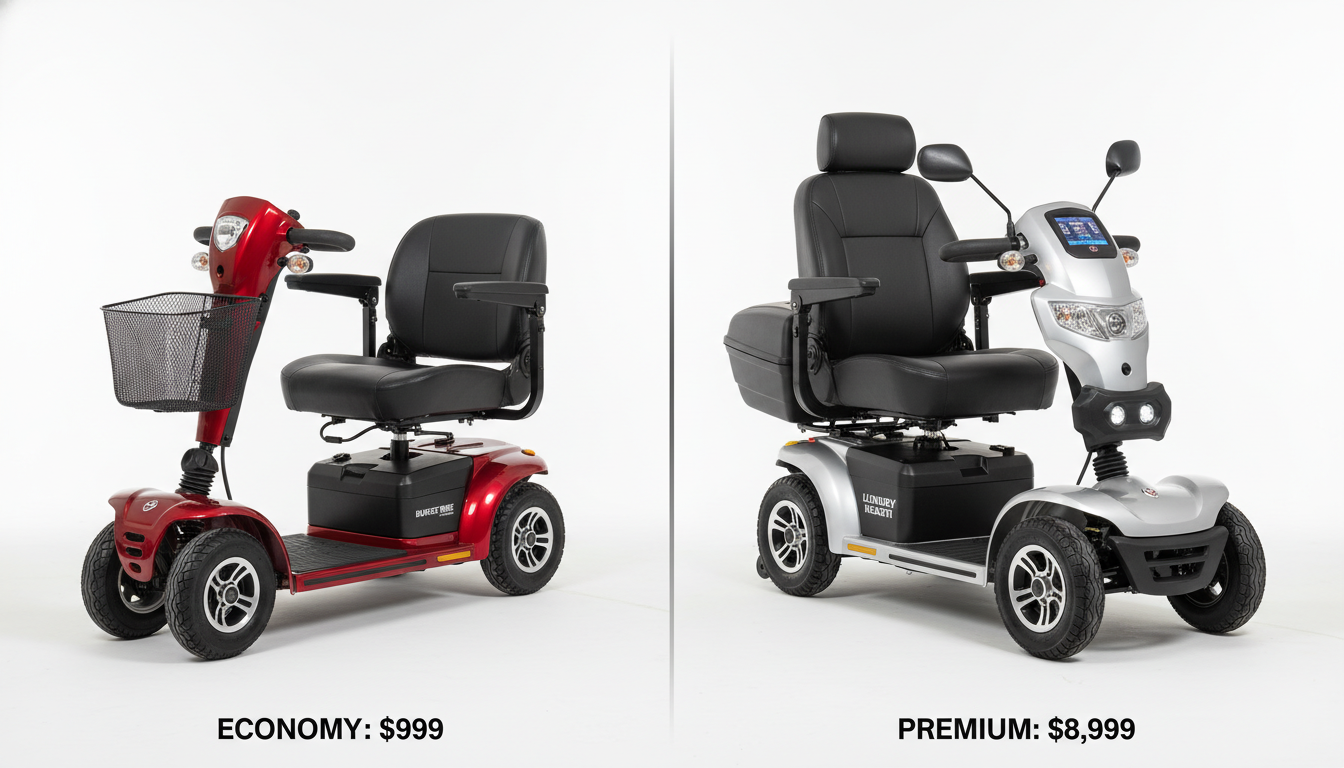
Brand Overview — Segmart vs Vive Mobility
Vive Mobility (vivehealth.com) is a US-based medical equipment company that specializes in mobility aids and durable medical equipment (DME). They design, test, and support their products from the United States, and they are known for solid build quality and responsive US-based customer support. Their mobility scooter lineup ranges from approximately $1,200 to $2,000.
Segmart is a marketplace brand primarily sold through Amazon and Walmart. They focus on the budget end of the market with products manufactured overseas. Their mobility scooter prices range from roughly $400 to $800, making them one of the most affordable options available. Segmart is popular with entry-level buyers who want to try a mobility scooter without a large upfront investment.
The price gap between these two brands is significant — often $800 to $1,000 or more for comparable models. The question is whether that premium is justified. Let us break it down.
Build Quality and Durability Compared
This is where the two brands diverge most clearly.
Vive scooters use a steel frame with medical-grade plastics for the body panels. The forks are reinforced, the bearings are higher quality, and the seats feature thicker padding with better ergonomic support. The overall fit and finish feels solid — panels align properly, fasteners hold tight, and the controls operate smoothly. With normal daily use, a Vive scooter will typically last 5 to 8 years before requiring major component replacement.
Segmart scooters are adequate for light use but show their budget origins in the details. The steel tubing is thinner gauge, plastic components are more prone to cracking under stress or UV exposure, and seat padding is noticeably thinner. None of these are deal-breakers for occasional indoor use, but under daily outdoor use the wear shows faster. Expect a Segmart scooter to last 2 to 4 years with regular use.
To put it practically: if you use your scooter a few times a week for shopping trips, a Segmart will serve you fine. If you depend on your scooter every day for getting around your home and neighborhood, the Vive’s build quality becomes a meaningful advantage.
Model-by-Model Comparison
Here is how the current lineup stacks up spec by spec.
| Model | Price | Weight Cap | Range | Turning Radius | Battery | Warranty |
|---|---|---|---|---|---|---|
| Vive 4-Wheel | ~$1,800 | 300 lbs | 15 mi | 51″ | 24V 20Ah | 1-year full |
| Vive 3-Wheel | ~$1,500 | 250 lbs | 12 mi | 32″ | 24V 12Ah | 1-year full |
| Segmart 4-Wheel | ~$600 | 265 lbs | 10 mi | 55″ | 24V 12Ah | 90-day |
| Segmart 3-Wheel | ~$450 | 220 lbs | 8 mi | 38″ | 24V 9Ah | 90-day |
The spec differences tell part of the story. Vive’s 4-Wheel offers 50% more range, a tighter turning radius, and higher weight capacity than the Segmart equivalent. The Vive 3-Wheel has the tightest turning radius of any model here at 32 inches, which is a significant advantage for indoor navigation. For a deeper look at 3-wheel versus 4-wheel considerations, see our 3-wheel vs 4-wheel mobility scooter comparison.
Customer Support and Warranty
This is the biggest practical difference between the two brands, and it matters enormously for seniors who depend on their scooter daily.
Vive offers a 1-year full warranty that covers the frame, motor, battery, and electronics. Their customer support is US-based with phone and email options. When something breaks, replacement parts typically ship within 2 to 3 business days. Their support team can troubleshoot issues over the phone and walk you through basic repairs.
Segmart offers a 90-day limited warranty. Support is handled through marketplace messaging (Amazon or Walmart), which means response times are slower and the support agents may have limited technical knowledge about the specific product. Replacement parts are sometimes unavailable or take weeks to arrive because they ship from overseas.
For a younger, tech-savvy buyer who can source third-party parts and do basic repairs, Segmart’s limited support is manageable. For a senior who needs their scooter to work reliably and wants someone to call when it does not, Vive’s support infrastructure is vastly superior.
Which Brand Is Better for Seniors?
Vive wins for:
- Anyone who depends on their scooter daily for mobility
- Heavier users who need higher weight capacity
- Outdoor use on varied terrain
- Anyone who values US-based phone support and fast parts replacement
- Seniors who want a scooter that will last 5+ years
Segmart works for:
- Occasional light indoor use (a few times per week)
- Tight budgets where $1,500+ is not feasible
- Younger users who can troubleshoot and source parts independently
- A “try before committing” approach — testing whether a scooter fits your lifestyle before investing in a premium model
Here is the honest take: a Segmart at $500 is not a bad first scooter. It works, it moves, and it gives you a feel for whether powered mobility is right for you. But if your budget allows it, Vive’s build quality and support make it the smarter long-term investment for aging-in-place seniors who will rely on their scooter as a daily tool rather than an occasional convenience.
Our Recommendation
For most seniors reading this site, Vive is the clear choice. The better warranty, better customer support, and better build quality justify the $800 to $1,000 premium. Over a 5-year ownership period, the Vive actually costs less per year than replacing a Segmart every 2 to 3 years.
That said, we understand that not everyone can spend $1,500 to $1,800 upfront. If budget is the primary constraint, a Segmart can serve as a reasonable starting point for light use. Just go in with realistic expectations about durability and support.
For a complete overview of all scooter types, features, and what to look for when buying, visit our mobility scooter buying guide. You can also compare 3-wheel versus 4-wheel configurations or explore zero-turn scooters for tight indoor spaces.
Explore All Mobility Scooter Options
Compare scooter types, features, and prices in our complete mobility scooter resource center.
View Mobility Scooters
About James Wilson
Home Safety Specialist & Accessibility Consultant
Certified home safety specialist with 10+ years designing accessible living spaces for seniors and individuals with mobility challenges.