What Is a Rolling Shower? Complete Guide for Seniors & Caregivers
A curbless, wheelchair-accessible shower that rolls straight in from the bathroom floor. Here is everything to know before building one.

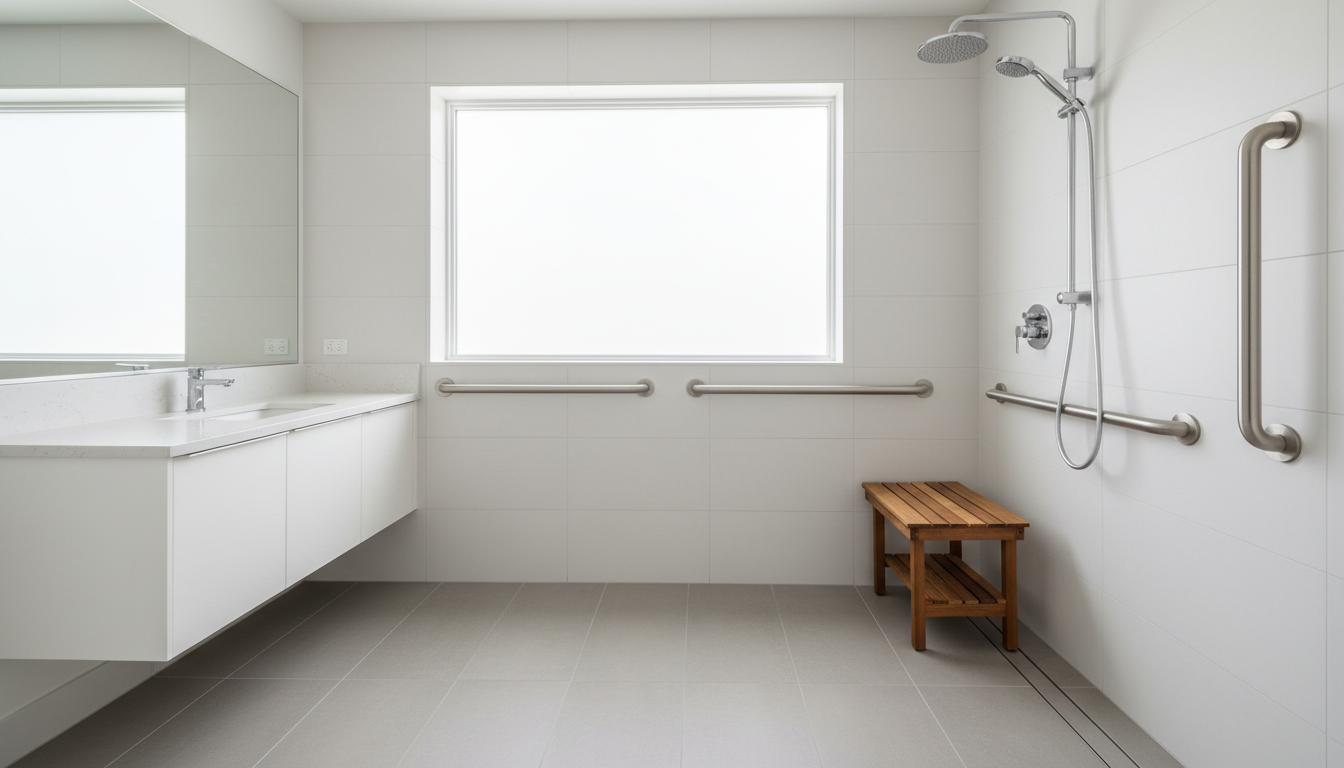
What Is a Rolling Shower?
A rolling shower — also called a roll-in shower, curbless shower, or barrier-free shower — is a walk-in shower designed without a raised threshold or curb. The bathroom floor transitions seamlessly into the shower area, allowing someone in a wheelchair, rollator, or shower commode chair to roll directly into the shower without lifting over a lip.
The term "rolling shower" emphasizes its accessibility for wheeled mobility devices, and it has become one of the most requested bathroom modifications for seniors aging in place. Unlike traditional walk-in showers that still have a 2–4 inch curb, a true rolling shower has a completely flat entry with water managed by floor slope and a linear drain.
Rolling Shower vs Walk-In Shower vs Walk-In Tub
These terms are often used interchangeably, but they describe different fixtures with different accessibility levels:
| Feature | Rolling Shower | Walk-In Shower | Walk-In Tub |
|---|---|---|---|
| Threshold height | 0 inches (curbless) | 2–4 inches | 4–7 inches |
| Wheelchair accessible | Yes | No (must step over curb) | No |
| Seated bathing | Optional bench/chair | Optional bench | Built-in seat, submerged |
| Installation cost | $6,000–$15,000 | $3,000–$8,000 | $4,000–$12,000 |
| Best for | Wheelchair users, severe mobility loss | Moderate mobility, fall risk | Users who prefer soaking baths |
For a deeper comparison, see our guide on walk-in tubs vs roll-in showers.
Who Benefits Most from a Rolling Shower?
Rolling showers are ideal for:
- Wheelchair users who need to transfer from a wheelchair to a shower chair, or roll a shower commode chair directly into the shower.
- Seniors with severe mobility loss who can no longer safely lift their legs over any curb.
- Individuals recovering from hip, knee, or back surgery who need temporary barrier-free access.
- Caregivers assisting with bathing, since the open floor plan allows them to stand inside the shower area to help without stepping over a curb.
- Multigenerational households planning for future accessibility needs.
Key Features of a Properly Designed Rolling Shower
Curbless Entry
The entry must be completely flat — no raised lip, no transition strip that would block wheels. This is achieved by lowering the shower floor's subfloor by 2–3 inches during installation so that the finished floors are flush.
Linear or Trench Drain
A single long drain across the back or side of the shower replaces the traditional center drain. This allows the floor to slope in only one direction (toward the drain) rather than sloping to a central point, which would create uneven surfaces for rolling mobility devices.
Handheld Showerhead on Slide Bar
A handheld showerhead mounted on an adjustable slide bar allows seated users and caregivers to direct water where needed without requiring the user to stand or lean.
Grab Bars
ADA-compliant grab bars should be installed on at least two walls, anchored into wall studs or solid blocking rated for 250+ lbs.
Built-In or Folding Bench
A teak or phenolic bench provides a seated bathing surface for users who do not use a wheelchair. Folding benches save space when not needed.
Non-Slip Flooring
Small-format tiles (2x2 inch or mosaic) with a high coefficient of friction (>0.6) provide traction without the deep grout lines that can catch wheels.
How Much Does a Rolling Shower Cost?
Installation costs range from $6,000 to $15,000, with most homeowners spending $8,000–$12,000. The variation depends on:
- Subfloor modification ($1,500–$4,000) — lowering the shower area to achieve a true curbless entry.
- Waterproofing ($800–$2,000) — essential with curbless design to prevent water migration.
- Linear drain ($400–$1,200) — more expensive than traditional center drains.
- Tile and finishes ($2,000–$5,000) — varies widely by material selection.
- Plumbing relocation ($500–$2,500) — if moving showerhead or drain location.
- Fixtures ($400–$1,500) — handheld head, slide bar, bench, grab bars.
Medicare does not cover rolling shower installation, but VA benefits, Medicaid HCBS waivers, and state-level aging-in-place grants may help offset costs for eligible seniors.
Installation Considerations for Older Homes
Rolling shower installation is more complex than a standard shower remodel, especially in older homes. Key considerations:
- Slab-on-grade homes require breaking and re-pouring concrete to achieve curbless entry — adds $2,000–$5,000.
- Upstairs bathrooms may need structural modifications to lower the subfloor between floor joists.
- Waterproofing membrane (Schluter Kerdi, Laticrete Hydro Ban, or equivalent) is non-negotiable — water will find any gap in a curbless design.
- Door swing needs to be evaluated; many rolling showers use roll-up curtains or glass panels instead of doors to preserve wheelchair access.
Alternatives If a Full Rolling Shower Isn't Feasible
If budget or structural constraints prevent a true curbless shower, consider:
- Low-threshold showers with a removable ramp (1.5–2 inch threshold) — $3,000–$6,000.
- Walk-in tubs with built-in seating — see our walk-in tub cost guide for pricing.
- Prefabricated barrier-free shower pans — easier retrofits with a minimal 0.5-inch transition.
Is a Rolling Shower Right for You?
A rolling shower is the gold standard for bathroom accessibility, but it is also the most significant bathroom renovation most homeowners will undertake. It is the right choice if:
- The user currently uses or will likely use a wheelchair.
- You plan to age in place long-term (10+ years).
- Budget allows for proper waterproofing and structural work.
- You want the bathroom to be caregiver-friendly.
Ready to explore bathroom accessibility options? Schedule a free in-home assessment and we will evaluate your bathroom, mobility needs, and budget to recommend the best solution.