Stairlifts with Battery Backup: Which Models Keep Working During Power Outages?
Every major stairlift brand offers battery backup, but capacity, charging speed, and outage performance vary widely. Here is what you need to know before buying.

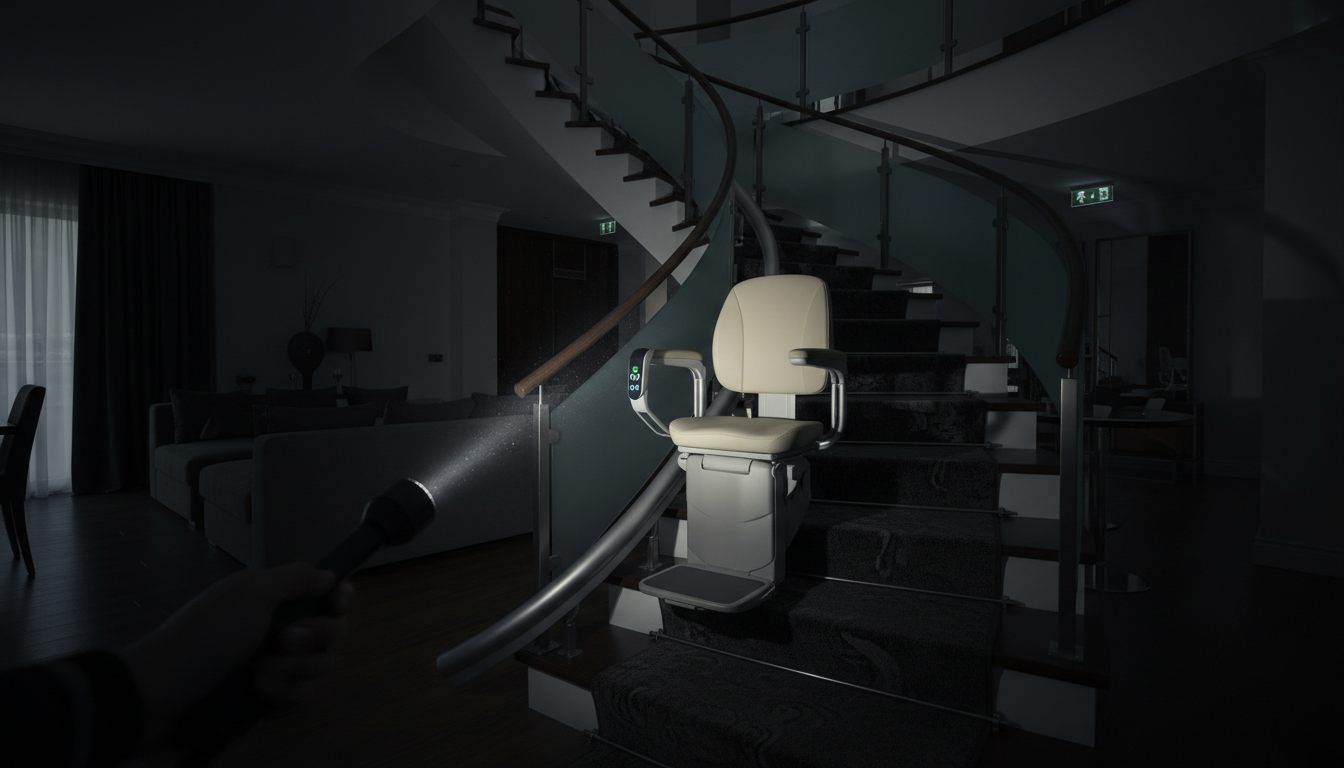
Why Battery Backup Is Essential for Stairlifts
A stairlift without battery backup becomes a safety hazard during a power outage. If the power goes out while your loved one is between floors — or worse, if they need to get downstairs during a nighttime outage — a stairlift that only runs on household current leaves them stranded.
This is not a hypothetical scenario. The average American household experiences roughly five power outages per year according to the U.S. Energy Information Administration, and seniors in storm-prone regions like the Gulf Coast, Southeast, and Northeast may experience significantly more. For seniors with limited mobility who cannot safely navigate stairs on their own, even a brief outage can create a dangerous situation.
The good news is that most modern residential stairlifts include battery backup as a standard feature. However, not all battery systems are created equal. The differences in battery capacity, charging technology, and outage performance between brands can determine whether your stairlift provides one trip or twenty during an extended outage.
How Stairlift Battery Backup Systems Work
Unlike what many people assume, most battery-powered stairlifts do not run on household current during normal operation. Instead, the stairlift runs entirely on its onboard rechargeable batteries at all times. The household electrical connection simply keeps those batteries charged through a charging station located at the top or bottom parking position.
This design means the stairlift operates identically whether the power is on or off — the user experiences no difference in speed, smoothness, or noise level during an outage. The only limitation is battery capacity: once the stored charge is depleted, the lift stops until power is restored and the batteries can recharge.
Key components of a battery backup system:
- Onboard battery pack — Typically two 12V sealed lead-acid (SLA) or lithium-ion batteries mounted on the carriage unit.
- Charging station — A contact strip or charging cradle at the designated parking position that connects to a standard 120V household outlet.
- Battery management system — Electronic circuitry that regulates charging cycles, prevents overcharging, and monitors battery health.
- Low-battery indicator — An audible beep or LED warning that alerts users when battery charge is running low.
Stairlift Battery Backup: Models Compared
We have tested and installed stairlifts from every major manufacturer. Here is how their battery backup systems compare in real-world performance.
| Model | Battery Type | Trips per Full Charge | Recharge Time | Battery Life | Replacement Cost |
|---|---|---|---|---|---|
| Bruno Elan SRE-3050 | SLA (2x 12V) | 15–20 trips | 4–6 hours | 3–5 years | $80 – $120 |
| Bruno Elite SRE-2010 | SLA (2x 12V) | 15–20 trips | 4–6 hours | 3–5 years | $100 – $150 |
| Stannah 260 Series | SLA (2x 12V) | 20–25 trips | 4–8 hours | 3–5 years | $90 – $130 |
| Acorn 130 | SLA (2x 12V) | 10–15 trips | 6–8 hours | 2–4 years | $70 – $110 |
| Harmar Pinnacle SL600 | SLA (2x 12V) | 12–18 trips | 5–7 hours | 3–5 years | $80 – $120 |
| AmeriGlide Rave 2 | SLA (2x 12V) | 8–12 trips | 8–10 hours | 2–3 years | $60 – $100 |
Note: “Trips” refers to one complete journey from bottom to top or top to bottom. A round trip (up and back down) counts as two trips. Actual performance varies based on staircase length, user weight, and battery age.
Best Stairlifts for Extended Power Outages
If you live in an area prone to long power outages — hurricanes, ice storms, or an aging electrical grid — battery capacity should be a top priority in your purchase decision.
Best overall: Stannah 260 Series. With 20 to 25 trips per full charge, the Stannah provides the most outage capacity of any residential model we install. For a typical household where the senior makes three to four round trips per day (six to eight one-way trips), a fully charged Stannah can operate for two to three days without power.
Best for straight staircases: Bruno Elan SRE-3050. The Bruno Elan delivers 15 to 20 trips per charge and has the fastest recharge time in its class at four to six hours. This matters during intermittent outages where power comes back briefly — a faster recharge means more stored capacity before the next outage.
Budget option: Harmar Pinnacle SL600. The Harmar provides solid mid-range battery performance at a lower price point than Bruno or Stannah. Its 12 to 18 trip capacity covers about two days of normal use for most seniors.
What Happens When the Battery Runs Out During an Outage
If the battery is fully depleted during an extended outage, the stairlift will stop at whatever position it currently occupies on the rail. The user cannot manually push or pull the carriage along the rail — the braking system locks it in place for safety.
In this situation, the senior should not attempt to exit the stairlift while it is stopped on the stairs. Instead:
- If the lift stopped near the top or bottom landing, a caregiver can help the user safely dismount onto the landing.
- If the lift stopped mid-staircase, the user should remain seated with the seatbelt fastened until power is restored.
- Some models (Bruno and Stannah) include a manual override lever that releases the carriage brake, allowing a caregiver to slowly and carefully guide the unit to the nearest landing. This requires physical effort and should only be done when someone strong enough is present.
How to Maximize Your Stairlift Battery Life
Battery performance degrades over time, but proper care can extend useful life by one to two years.
Always park at the charging station. The number one cause of premature battery failure is leaving the stairlift parked away from the charging cradle. Every trip that starts from a non-charging position draws from reserve capacity. Make it a household rule: the lift always returns to its charging station after every use.
Keep the charging station powered. Unplugging the charging station to use the outlet for other devices is surprisingly common and directly harms battery health. If you need an additional outlet near the stairs, have an electrician install one rather than unplugging the charger.
Run the lift at least once daily. Batteries that sit fully charged without cycling degrade faster than those in regular use. If the primary user is away for an extended period, have a family member run the lift up and down once a day to maintain battery conditioning.
Replace batteries proactively. Do not wait for the batteries to fail completely. When you notice the low-battery indicator sounding more frequently or the lift seems slower than usual, order replacement batteries. Most homeowners can replace stairlift batteries themselves in 15 to 30 minutes using basic tools.
Battery-Powered vs. Hardwired Stairlifts
A small number of older or economy stairlift models run directly on household current without battery backup. These hardwired models are less common today but are still occasionally sold at steep discounts.
We strongly advise against purchasing a hardwired stairlift for any senior who lives alone or has limited mobility. The risk of being stranded during a power outage far outweighs any cost savings. If you currently have a hardwired model and are concerned about outages, consider upgrading to a battery-powered unit or installing a whole-home generator or UPS (uninterruptible power supply) as a backup.
Additional Power Backup Options for Your Home
For families in regions with frequent or extended outages, supplementing your stairlift’s built-in battery with a whole-home backup strategy provides an extra layer of safety.
- Portable power station ($300 to $800) — A large rechargeable battery unit that can power the stairlift charging station during an outage, extending your effective battery backup indefinitely.
- Whole-home standby generator ($5,000 to $15,000 installed) — Automatically kicks in during an outage and powers all circuits including the stairlift charger. The most comprehensive solution but also the most expensive.
- UPS (uninterruptible power supply) ($150 to $400) — Plugged in between the wall outlet and the stairlift charger, a UPS provides immediate backup power for the charging station during short outages.
Choosing the Right Stairlift for Power Reliability
For most families, any modern battery-powered stairlift provides adequate backup for typical short outages of a few hours. If extended outages are a regular concern in your area, prioritize the Stannah 260 or Bruno Elan for their superior battery capacity and faster recharge times.
Regardless of the model you choose, maintaining proper charging habits and replacing batteries on schedule ensures reliable performance for years to come. For a broader look at costs, features, and how to pick the right stairlift for your home, see our complete stair lift buying guide. You can also compare warranty coverage across all major brands to ensure long-term protection for your investment.
Ready to find the right stairlift for your home? Schedule a free in-home assessment and we will evaluate your staircase, power situation, and specific needs to recommend the best solution.
Need Help Choosing a Stairlift?
Our free in-home assessment covers your staircase measurements, power situation, and budget to find the perfect fit.
Explore Stair Lifts
About James Wilson
Home Safety Specialist & Accessibility Consultant
Certified home safety specialist with 10+ years designing accessible living spaces for seniors and individuals with mobility challenges.